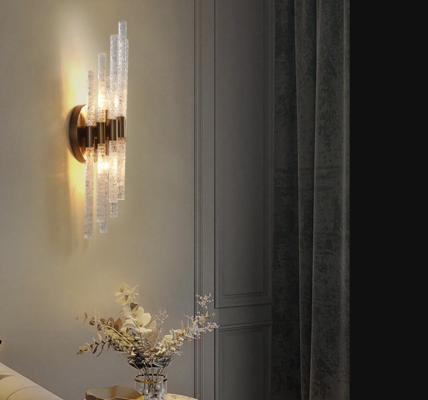
The “Elegant Ceramic Sconce: Clean Lines in Architecture” refers to a specific design philosophy and material application within the broader context of architectural lighting and interior design. This article explores the historical development, material properties, design principles, functional applications, and cultural impact of ceramic sconces characterized by their adherence to clean lines.
The use of ceramic in architecture and design dates back millennia, its origins intertwined with early human civilization’s need for durable and adaptable materials. When considering the ceramic sconce with clean lines, it’s important to understand the lineage of both the material and the form.
Early Ceramic Applications
Historically, ceramics were primarily employed for structural elements, utilitarian vessels, and decorative tiles. Early examples demonstrate a fundamental understanding of firing and shaping clay. These pieces, while often functional, rarely prioritized the minimalist aesthetic now associated with “clean lines.” Their forms were often dictated by manufacturing limitations or ornate, culturally symbolic embellishments.
Industrial Revolution and Mass Production
The 18th and 19th centuries, marked by the Industrial Revolution, saw significant advancements in ceramic production. Mass manufacturing techniques allowed for greater uniformity and the potential for simpler forms, though decorative excesses often remained. The advent of electricity in the late 19th century fundamentally altered interior lighting design, moving away from candles and gas lamps. This shift presented new opportunities for wall-mounted fixtures.
Emergence of Modernist Aesthetics
The early 20th century, particularly movements like Bauhaus and Art Deco, championed the principles of simplification, functionality, and machine-age aesthetics. These movements were seminal in shifting design sensibilities towards “clean lines.” Designers began to strip away superfluous ornamentation, emphasizing geometric forms and unadorned surfaces. It was within this climate that the ceramic sconce, particularly those with a minimalist bent, began to gain traction as a deliberate design choice, reflecting a rejection of Victorian excesses. The material’s ability to be molded into precise, unblemished shapes made it an ideal medium for this emerging aesthetic.
Materiality and Form
The choice of ceramic as a material for lighting fixtures, particularly those embracing clean lines, is not arbitrary. Its inherent properties contribute significantly to the aesthetic and functional characteristics of the sconce.
Properties of Ceramic
Ceramics, broadly defined, are inorganic, non-metallic solids processed and hardened by heat. For sconces, stoneware and porcelain are common choices due to their durability and aesthetic qualities.
Durability and Longevity
Fired ceramic is inherently robust and resistant to scratches, fading, and chemical degradation. This makes it a long-lasting material suitable for permanent architectural installations. Unlike some metals that may tarnish or woods that might warp, ceramic holds its form and finish over extensive periods.
Surface Texture and Finish
Ceramic offers a wide range of surface finishes. An unglazed bisque ceramic can provide a matte, earthy texture that diffuses light softly and creates a tactile experience. Glazed ceramics, on the other hand, can offer a smooth, reflective surface, which can enhance light reflection or contribute to a sense of crispness and modernity. The ability to control both texture and reflectivity allows designers to subtly manipulate the visual weight and interaction of the sconce within a space.
Thermal Resistance
Ceramic’s excellent thermal resistance is a practical advantage, allowing it to safely house light sources that generate heat without compromising the material’s integrity or the fixture’s safety. This is a crucial consideration for any lighting appliance.
“Clean Lines” Defined
In the context of the ceramic sconce, “clean lines” refers to a design philosophy characterized by simplicity, clarity, and the absence of superfluous ornamentation.
Geometric Purity
This aesthetic often favors fundamental geometric shapes – squares, rectangles, circles, and cylinders – over intricate or organic forms. The edges are typically sharp and well-defined, contributing to a sense of precision and order.
Unfussy Surfaces
Surfaces are generally smooth and unadorned. Any texture present is usually subtle and uniform, contributing to the overall minimalist feel rather than detracting from it. The material itself is often allowed to speak, without heavy embellishment.
Restrained Color Palettes
Consistent with the overall minimalist approach, ceramic sconces with clean lines often employ neutral or subdued color palettes. Whites, grays, blacks, and muted earth tones are common, allowing the form and light to take precedence over vibrant color.
Design Principles and Axioms
The creation of a ceramic sconce with clean lines is guided by specific design principles that prioritize function, form, and integration within the architectural environment.
Form Follows Function
This foundational modernist principle dictates that the shape and structure of the sconce should be primarily determined by its intended purpose. For a sconce, this means efficiently housing the light source, directing light as required, and being easily maintainable. Aesthetic decisions, while important, are secondary to functional efficacy. A sconce designed under this principle will not have an element purely for decoration if it doesn’t serve a practical purpose related to lighting or installation.
Spatial Integration
A key aspect of a well-designed ceramic sconce with clean lines is its ability to seamlessly integrate into its architectural surroundings. It should complement, rather than compete with, the larger architectural scheme.
Wall as Canvas
Consider the wall as a canvas. A ceramic sconce with clean lines acts as a deliberate brushstroke, enhancing the perception of the wall rather than merely sitting on it. Its form should feel inherent to the surface, almost growing from it.
Light as Architectural Element
The light emitted by the sconce is arguably as important as the fixture itself. Designers exploit ceramic’s properties to control light distribution – upward, downward, or diffused – to sculpt space and highlight architectural features. The clean lines of the fixture ensure that the source of the light remains unobtrusive, allowing the light itself to become the focal point of the interaction.
Simplicity as Sophistication
In this design approach, complexity is often equated with clutter. Simplicity, paradoxically, requires meticulous attention to detail. Every line, curve, and surface must be considered for its necessity and impact. This approach elevates the ordinary to the extraordinary through refinement.
Reductionism in Design
The process often involves stripping away non-essential elements until only the core essence of the sconce remains. This reductionist approach is not about making something bland, but about achieving a profound clarity of form.
Craftsmanship and Precision
Achieving clean lines in ceramic requires high levels of craftsmanship. Imperfections become highly visible on smooth, unadorned surfaces. The precision in molding, firing, and finishing is paramount to delivering the intended aesthetic of understated elegance.
Functional Applications and Typologies
Ceramic sconces with clean lines serve a variety of functions beyond mere illumination, contributing to the overall ambiance and practicality of a space.
Ambient Lighting
These sconces can scatter light across a wall or ceiling, providing a soft, diffused glow that contributes to the overall illumination of a room without harsh shadows or direct glare. This is particularly effective in spaces where a serene and understated atmosphere is desired.
Uplighting and Downlighting
Many clean-lined ceramic sconces are designed as uplighters or downlighters, or sometimes both. Uplighting can visually heighten a ceiling, while downlighting can illuminate pathways or create a sense of intimacy. The precise control of light direction is a hallmark of good sconce design.
Task Lighting
While less common for primary task lighting, certain configurations of ceramic sconces can provide supplementary light for specific activities, such as reading in a hallway or providing light near a vanity in a bathroom. Here, the emphasis shifts to controlled light focus, often achieved through specific internal reflector designs or aperture shapes.
Decorative and Emphatic Lighting
Even with their minimalist aesthetic, these sconces serve a decorative function. Their clean forms can act as subtle sculptural elements on a wall, adding texture and interest without overwhelming the space. They can also be used to emphasize architectural details or create visual rhythms within a larger schema.
Creating Visual Rhythms
When arranged in series, these sconces can establish powerful visual rhythms along a corridor or across a large wall, guiding the eye and contributing to the perceived structure of a space. The repetition of simple, elegant forms reinforces the intentionality of the design.
Highlighting Features
A well-placed ceramic sconce can subtly highlight a piece of art, a textured wall, or an architectural niche, drawing attention without competing with the feature itself. The neutral palette and clean lines ensure the focus remains on the illuminated object, not the illuminator.
Contemporary Relevance and Future Directions
The appeal of the ceramic sconce with clean lines endures in contemporary architecture and design, reflecting ongoing preferences for understated elegance, sustainability, and thoughtful integration.
Sustainability and Material Consciousness
Ceramic, being a natural material, aligns with increasing demands for sustainable design practices. Its durability means less frequent replacement, and its production, when optimized, can have a relatively low environmental impact compared to some synthetic alternatives.
Longevity and Reduced Waste
The inherent longevity of ceramic objects contributes to reduced consumption and waste. Investing in high-quality, durable ceramic fixtures with timeless designs means they are less likely to be discarded due to breakage or shifting trends.
Local Sourcing and Craft
The craft aspect of ceramic production also allows for local sourcing and manufacturing, reducing transportation costs and emissions, and supporting local artisans. This further enhances its appeal in a world increasingly conscious of ethical production.
Technological Integration
Modern ceramic sconces are increasingly integrating advanced lighting technologies, particularly LED (Light Emitting Diode) sources. LEDs offer energy efficiency, longevity, and small form factors that align perfectly with the clean-lined aesthetic.
Miniaturization and Form Freedom
The small size of LED components allows for greater freedom in designing the ceramic form, enabling even more compact and streamlined fixtures that maintain the integrity of clean lines without compromising light output.
Smart Lighting Integration
The integration of smart lighting controls allows for dimmability, color temperature adjustments, and programmed lighting scenes, further enhancing the functionality and user experience of these elegant fixtures. The technology often remains invisible, entirely concealed within the ceramic form, adhering to the clean-line principle.
Cultural and Architectural Significance
The “Elegant Ceramic Sconce: Clean Lines in Architecture” transcends a mere lighting fixture; it represents a philosophy of design that values clarity, thoughtful construction, and enduring aesthetic appeal. It stands as a modest but powerful testament to the principle that true elegance often resides in simplicity and deliberate execution. It is a dialogue between light, material, and space, offering a quiet yet profound contribution to the built environment. As architects and designers continue to seek balance between form and function, material integrity, and spatial harmony, the ceramic sconce with clean lines will undoubtedly retain its significance, evolving with new technologies while holding steadfast to its core aesthetic principles.