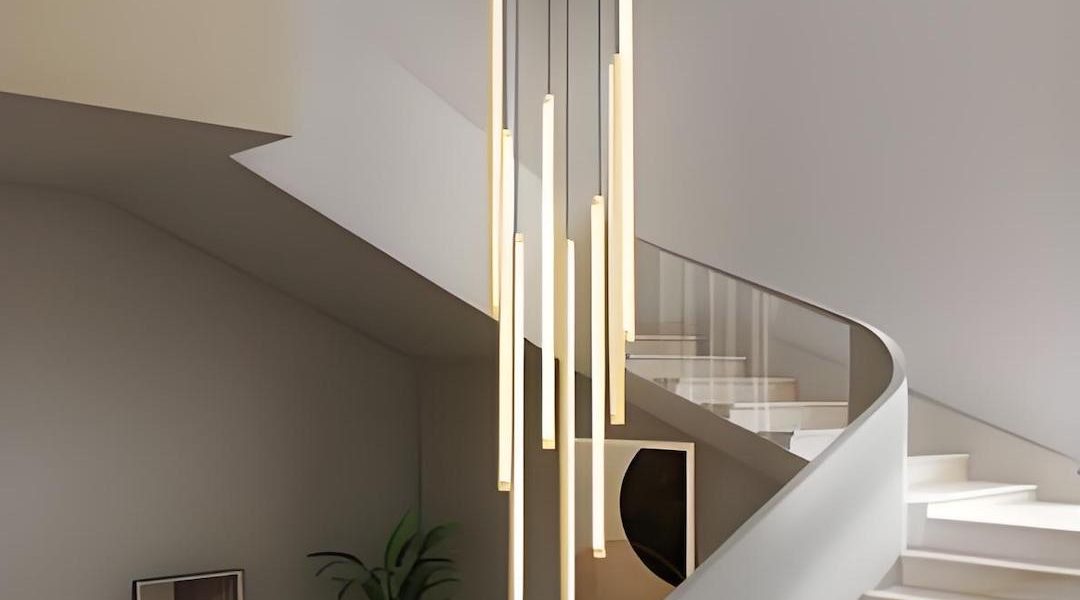

Contemporary spiral pendant lights offer a modern and often dramatic solution for illuminating staircase spaces. These fixtures, characterized by their twisting or helical forms, can serve as both functional lighting and significant sculptural elements within a home’s architecture. Their design allows for a cascading effect, directing light downwards and outwards, which is particularly beneficial for the vertical expanse of a staircase.
The visual appeal of contemporary spiral pendant lights Revopin lies in their departure from traditional, more static lighting designs. They bring a sense of movement and dynamism to a usually transitional space.
Materiality in Contemporary Spirals
The materials used in the construction of spiral pendant lights significantly influence their aesthetic and the quality of light they produce.
Metal Compositions
Metals such as brushed nickel, polished chrome, matte black, and brass are commonly employed. These materials offer durability and a range of finishes that can complement diverse interior design schemes. Brushed nickel and chrome often convey a sleek, modern feel, while matte black can provide a bold, geometric statement. Brass, in its various finishes from aged to polished, can introduce warmth and a touch of classic elegance to a contemporary form. The reflective properties of polished metals can bounce light, potentially increasing the perceived brightness of a space, while matte finishes absorb light, creating a softer, more diffused illumination.
Glass and Acrylic Elements
In some spiral designs, glass or acrylic elements are integrated. These might be clear, frosted, or colored, often forming the lampshades or diffusing components of the fixture. Frosted glass or acrylic diffuses light more evenly, reducing glare and creating a softer ambiance, which is desirable for illuminating stair treads. Clear elements, particularly when shaped and arranged in a spiral, can refract light, creating interesting patterns and a more dramatic visual impact. Acrylic, being lighter and more shatter-resistant than glass, is often used in larger or more complex spiral structures.
Other Incorporations
Less common, but increasingly present, are spiral pendants that incorporate natural materials like wood accents or even concrete elements. These can introduce organic textures and a grounded feel to the design, offering a contrast to purely metallic or glassy surfaces.
Form and Scale
The “spiral” itself is a versatile design motif. It can be a tight, uniform twist or a more organic, flowing curve.
Tight Spirals and Helical Structures
Fixtures with tightly wound helical structures often mimic natural forms like shells or DNA strands. They tend to be more compact and can be effective in narrower stairwells where space is a consideration. The density of the spiral can influence the directionality and intensity of the light, with tighter windings often channeling light more intensely downwards.
Open and Flowing Designs
Conversely, more open and flowing spiral designs can create a grander statement. These might involve multiple strands or a looser, more abstract interpretation of the spiral. These types of fixtures are well-suited for larger foyers or wider staircases, where their scale can be fully appreciated without overwhelming the space. The open nature allows light to disperse more broadly, contributing to the overall illumination of the surrounding area.
Customizable and Modular Systems
Some contemporary manufacturers offer modular spiral systems, allowing for customization of height, width, and the number of spiral elements. This caters to specific architectural requirements and design preferences, enabling a bespoke solution.
Functional Considerations for Staircase Lighting
Beyond their aesthetic qualities, spiral pendant lights must function effectively as illuminators for stairways. This involves careful consideration of light output, placement, and safety.
Illumination Levels and Light Distribution
The primary function of any lighting fixture is to provide adequate light. For staircases, this means ensuring visibility of each step and the surrounding landing areas.
Downward-Focused Light
Most spiral pendant lights are designed to direct a significant portion of their light downwards. This is crucial for illuminating the treads of the stairs, preventing shadows that could lead to missteps. The helical design naturally channels light in this direction. The precise angle and spread of this downward light can be influenced by the fixture’s internal reflectors and the shape of the shades or diffusers.
Ambient Light Contribution
While downward light is paramount, spiral pendants also contribute to the ambient light of the staircase. Light reflecting off walls and ceilings can provide a softer, more general illumination, reducing harsh contrasts. The color temperature of the light source also plays a role here; warmer tones (around 2700K-3000K) are generally preferred for residential settings, creating a more inviting atmosphere.
Brightness and Wattage
The wattage and lumen output of the light sources within the spiral are critical. For safety, staircases typically require higher illumination levels than general living areas. The fixture’s design can sometimes dictate the type of bulb it accommodates (e.g., integrated LED, E26 base), influencing the available brightness options.
Placement and Installation Challenges
The installation of a substantial fixture like a spiral pendant light in a vertical space warrants careful planning.
Ceiling Height and Drop Length
The drop length of the pendant is a significant factor. It needs to be adjusted so that the lowest point of the fixture does not pose a head-bumping hazard for anyone walking up or down the stairs. Conversely, hanging it too high can diminish its visual impact and its effectiveness in illuminating the steps. Professional installation is often recommended to ensure correct and secure mounting.
Proximity to Stairs and Banisters
The positioning of the pendant relative to the edge of the stairs and the banister is important. It should illuminate the path without creating glare for users or obstructing their movement along the banister. The width of the staircase also influences how central or offset the pendant should be.
Electrical Requirements and Support
Spiral pendant lights, particularly larger or heavier models, require adequate electrical supply and robust ceiling support. The weight of the fixture must be considered, and the mounting hardware must be rated to safely bear its load. This often necessitates installation into a structural joist or the use of appropriate bracing.
Safety and Glare Mitigation
Ensuring the safety of users is paramount in staircase lighting design.
Preventing Direct Glare
The design of the spiral itself, along with the use of diffusers or well-integrated light sources, helps to mitigate direct glare. Light sources that are fully enclosed or deeply recessed within the spiral structure are less likely to cause discomfort or temporary blindness.
Color Rendering Index (CRI)
A high CRI (Color Rendering Index) ensures that colors appear natural under the light. This is important for discerning the nuances of stair colors and textures, further enhancing safety and visual comfort.
Types of Contemporary Spiral Pendant Lights
The term “spiral” can encompass a range of designs, from literal helical forms to more abstract interpretations.
Literal Helical Designs
These fixtures most directly embody the spiral concept, featuring a clear twisting or coiled structure.
Single Coil Spirals
A single, continuous strand that twists around a central axis is a common and elegant design. This can be achieved with a solid material or a series of interconnected elements. The visual effect is one of continuous motion.
Multi-Coil or Braided Spirals
Some designs feature multiple strands that twist together, creating a more complex and voluminous form. This can resemble a braid and offers a richer visual texture. The interplay of light and shadow between the multiple coils can be quite dramatic.
Inverted Spirals
While less common, some designs feature a spiral that appears to expand outwards as it descends, or a spiral that is more cone-shaped. These can offer a different approach to light distribution.
Abstract and Sculptural Spirals
Many contemporary pendants interpret the spiral motif in a more abstract manner, prioritizing sculptural form over a precise helical representation.
Organic and Fluid Spirals
These designs often mimic natural, flowing shapes, like unfurling leaves or water currents. The “spiral” element might be suggested by the curve and overlap of multiple elements rather than a strict rotation.
Geometric Interpretations
Other abstract spirals utilize geometric components – such as discs, rings, or panels – arranged in a radial or spiraling pattern. These can create striking visual effects with light and shadow play.
Cascading or Layered Designs
Some fixtures achieve a spiraling effect through the layering of multiple elements at different heights, creating a sense of descent that is reminiscent of a spiral.
Illuminating Specific Staircase Architectures
The suitability of a contemporary spiral pendant light can depend heavily on the architectural context of the staircase.
For Open-Plan Homes
In open-plan living spaces where staircases are often visually prominent, a striking spiral pendant can act as a central art piece.
Focal Point in a Double-Height Foyer
A large, dramatic spiral pendant hung in a double-height foyer can command attention and anchor the expansive space. The verticality of the foyer is complemented by the cascading form of the light. Its presence can tie together different living areas that open onto the foyer.
Defining Zones
In an open-plan layout, a well-placed spiral pendant can subtly delineate the staircase area from the surrounding living or dining zones without the need for physical barriers. The light draws the eye and signals a distinct functional space.
For Traditional and Period Homes with Modern Updates
Incorporating contemporary spiral pendants into more traditional architectural settings can create a dialogue between old and new.
Juxtaposition of Styles
A sleek, metallic spiral pendant in a house with classic moldings or a grand staircase can provide a modern counterpoint, preventing the space from feeling dated. The contrast can be visually engaging and sophisticated.
Harmonizing with Existing Features
Careful selection of materials and finishes can help a contemporary spiral pendant blend with, rather than clash with, a more traditional interior. For instance, a brass spiral might complement antique brass hardware or a wooden balustrade.
For Narrow or Compact Staircases
While large, dramatic spirals might seem ill-suited for tight spaces, smaller or more streamlined designs can still be effective.
Slim and Vertical Designs
Pendants with a more elongated, vertical spiral form can work well in narrow stairwells, emphasizing the height without encroaching on circulation space. The illusion of depth can be enhanced.
Minimalist Spirals
A minimalist interpretation of a spiral, perhaps with a single, slender strand, can provide adequate illumination and a touch of modern design without overwhelming a small area. The light source itself might be discreetly integrated into the form.
Technical Specifications and Lighting Design Principles
Understanding the technical aspects of these lighting fixtures is crucial for effective selection and installation.
Light Source Technology
The type of light source significantly impacts energy efficiency, lifespan, and light quality.
Integrated LED Systems
Many contemporary spiral pendants feature integrated LED technology. This allows for a more streamlined and compact design, as the light sources are built directly into the structure. LEDs are energy-efficient, have a long lifespan, and offer a wide range of color temperatures and dimming capabilities. The design of the LED array within the spiral can direct light precisely where it’s needed.
Replaceable Bulb Options
Some designs still utilize standard bulb sockets, such as E26 or GU10. This offers flexibility in choosing light bulbs with specific brightness, color temperature, and dimming preferences. However, it can also mean that the bulb itself might be visible within the spiral, which needs to be considered from a design perspective.
Color Temperature and Brightness Control
The ambiance of a staircase can be significantly altered by the characteristics of the light.
Color Temperature Selection
As mentioned, warmer color temperatures (2700K-3000K) are generally preferred for residential comfort. Cooler temperatures (4000K+) can be used in more modern or minimalist settings, but may feel less inviting. Some fixtures offer tunable white technology, allowing the user to adjust the color temperature to suit the time of day or mood.
Dimmability
Dimmable spiral pendant lights are highly recommended for staircases. The ability to adjust the light intensity allows for fine-tuning illumination levels, providing bright light for safe passage when needed and a softer glow for ambiance during other times. This also contributes to energy savings.
Energy Efficiency and Sustainability
Modern lighting solutions are often designed with energy consumption and environmental impact in mind.
LED Efficiency
The inherent efficiency of LED technology means that spiral pendants utilizing LEDs consume less energy than incandescent or halogen alternatives, leading to lower electricity bills and reduced carbon footprint.
Material Choices and Longevity
The durability of materials used, such as high-quality metals and robust diffusers, contributes to the longevity of the fixture, reducing the need for frequent replacement.
Modern Enhancements and Smart Home Integration
Contemporary lighting increasingly integrates with smart home technology.
Smart Control Options
The ability to control lighting through apps or voice commands offers enhanced convenience and customization.
App-Controlled Brightness and Color
Many smart spiral pendants can be controlled via a smartphone app. This allows for remote adjustment of brightness, and in some cases, color temperature. Scheduling options can also be set up, automating when the lights turn on or off.
Voice Assistant Compatibility
Integration with popular voice assistants like Amazon Alexa or Google Assistant allows for hands-free control of the lighting. Saying “dim the staircase lights” can execute the command.
Color Changing Capabilities
While less common for primary staircase illumination due to safety considerations, some decorative spiral pendants might offer subtle color-changing features for accent lighting or special occasions. However, for functional lighting, consistent and appropriate color temperature is key.
Sensor Integration
Some smart lighting systems can incorporate motion or occupancy sensors. For a staircase, this could mean the lights automatically illuminate when someone enters the area and dim or turn off after a period of inactivity, optimizing energy use and providing convenience.
Installation Protocols and User Experience
The user experience extends from selection and installation to daily operation.
Ease of Control
The primary goal of smart home integration is to simplify user interaction. Intuitive apps and reliable voice command recognition are essential for a positive user experience.
Reliability of Connection
For smart fixtures, a stable Wi-Fi or Bluetooth connection is paramount. Intermittent connectivity can negate the benefits of smart control. Manufacturers often provide detailed setup guides to ensure a smooth integration process.
By considering these design principles, functional requirements, and technological advancements, contemporary spiral pendant lights can transform a staircase from a mere passage into a well-illuminated and architecturally significant feature of the home.